Heritage Wine · Cyprus
What Is Commandaria? The World's Oldest Named Wine, Explained
Made in the same mountain villages for over 800 years, Commandaria is Cyprus’s most famous wine and one of the most remarkable things you can put in a glass.
By CWFexpo Editorial12 min readUpdated April 2026Part of our Cypriot Wine series
Somewhere in the 12th century, a Crusader knight sat down with a cup of Cypriot wine and found it so remarkable that he wrote about it. The wine he was drinking was what we now call Commandaria. It was extraordinary then. It is still being made today, in the same mountain villages, by people who have been doing this for generations.
It is, by most accounts, the world’s oldest named wine still in commercial production. And most people in the UK have never heard of it.
That’s not a reflection on the wine. It’s a reflection on how narrow our collective idea of wine geography has become French, Italian, Spanish, Australian, New Zealand. The list has expanded over decades, but it still rarely reaches the far eastern corner of the Mediterranean, where winemaking has been continuous since before most of the world’s famous wine regions existed.
This guide exists to fix that. By the end of it, you’ll know exactly what Commandaria is, why it matters, what it tastes like, and how to find it.
In brief
Commandaria is a naturally sweet amber wine produced in fourteen designated villages in the southern foothills of the Troodos mountains in Cyprus. Made from sun-dried Xynisteri and Mavro grapes, it holds a PDO (Protected Designation of Origin) and is widely cited as the world's oldest named wine still in production, with documented references dating to the 12th century.
What Commandaria Actually Is
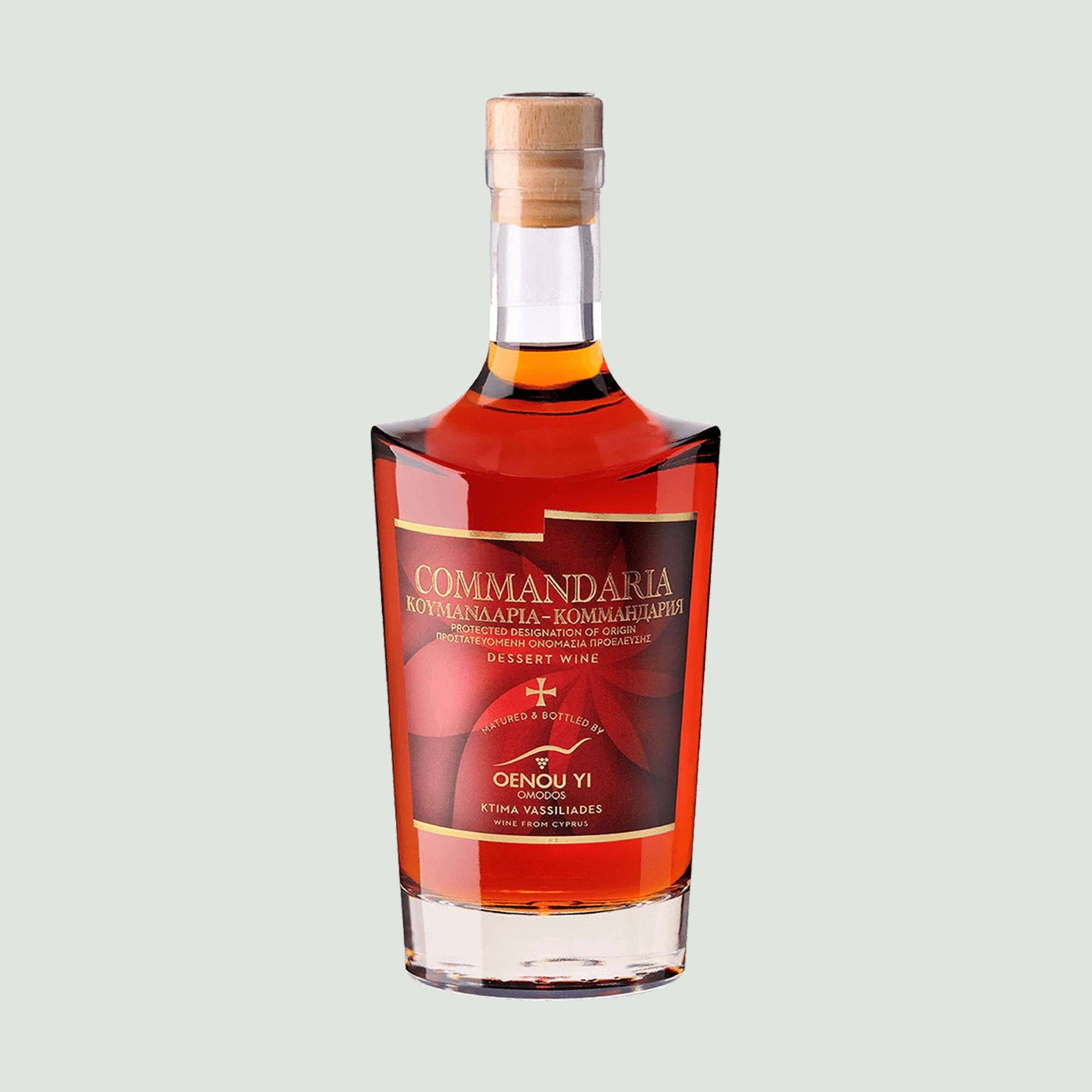
Commandaria is a sweet, amber-coloured wine produced exclusively in a legally defined area of Cyprus. It is made from two indigenous grape varieties, Xynisteri (white) and Mavro (red) which are harvested, then sun-dried before fermentation. This drying process concentrates the natural sugars dramatically, giving Commandaria its characteristic richness and sweetness.
It is not fortified. This is a point worth emphasising, because Commandaria is often compared to Port, Madeira, or Sherry, all of which have their fermentation arrested by the addition of grape spirit. Commandaria achieves its sweetness and its higher alcohol level entirely naturally, through the concentration of sugar in the dried grapes. The wine that results is a direct product of sun, soil, altitude, and time, nothing added, nothing removed beyond what evaporation takes during ageing.
It carries a PDO (Protected Designation of Origin) which means only wine made from the correct grapes, grown in the correct villages, processed in the correct way, can legally be called Commandaria. This isn’t a marketing label. It’s a genuine geographical and qualitative protection with teeth, similar to the AOC system in France or DOC in Italy. The designation covers both the wine and the land it comes from.
The History Behind the Bottle
The story of winemaking in Cyprus predates Commandaria by several thousand years. Archaeological evidence places wine production on the island as far back as 3,500 BC. The wine that would eventually become Commandaria was, by the time of the Crusades, already an ancient tradition.
The name itself dates to the 12th century. When the Knights Hospitaller established their administrative headquarters, their Grande Commanderie in the villages of the Troodos mountain foothills, they found a sweet wine being produced by local farmers that was unlike anything they had encountered elsewhere. The wine took the name of their command post, and history took it from there.
The most famous early endorsement came from Richard I of England. In 1191, during the Third Crusade, Richard conquered Cyprus and encountered the local wine. He is reported to have declared it “the wine of kings and the king of wines”, a quote that has appeared on Commandaria labels ever since, though wine writers are understandably cautious about placing too much weight on 800-year-old reported speech.
What is less disputed is the historical record of Commandaria’s reputation. In 1224, a wine competition was held in France, the Battle of Wines, in which King Philip Augustus of France requested wines from across the known world be brought to his court and judged. Commandaria won. The French judge declared it “the apostle of wines.” This is not a myth. It is documented.
“
Commandaria won the world's first recorded wine competition in 1224. The French judge declared it the apostle of wines. Eight hundred years later, it is still being made in the same villages.
— CWFexpo Wine Guide, 2026Through the Ottoman period, which brought significant disruption to Cypriot winemaking, Commandaria survived. The wine’s high sugar content made it naturally resistant to spoilage at a time when refrigeration and modern preservation were centuries away. The communities in the Commandaria zone maintained their tradition through periods of political upheaval that ended the wine cultures of other regions entirely.
The modern era has brought both standardisation and, more recently, renewed artisanal interest. The largest producers, particularly SODAP and KEO who produce Commandaria at commercial scale, making it the most widely distributed Cypriot wine in the world. A smaller number of boutique producers are now exploring what Commandaria can be when made with the same rigour applied to fine wine elsewhere: small batches, longer ageing, and a genuine commitment to expressing the character of individual villages and vintages.
Where Commandaria Is Made
The Commandaria PDO covers fourteen villages in the southern foothills of the Troodos mountains, at altitudes ranging from approximately 300 to 900 metres. These are ancient communities some of the oldest continuously inhabited settlements in Cyprus and the landscape they sit in is striking: limestone terraces, scrubby Mediterranean vegetation, and a light that seems particularly golden in the late summer harvest period.
The key villages include Kalokhorio, Zoopigi, Ayios Konstantinos, Monagri, Lania, and Apsiou, among others. Each has its own microclimate, its own soil composition, and its own tradition of producing Commandaria. The differences between village expressions are real, though they are not widely communicated on labels at the commercial level. This is one area where the artisanal producers are beginning to push for more specificity and where the most interesting Commandaria of the next decade is likely to emerge.
The combination of altitude, limestone soils, and the particular pattern of rainfall and heat in this part of Cyprus creates conditions that are uniquely suited to the production of great sweet wine. The grapes ripen fully in the long, hot summer. The harvest happens in early autumn. The drying happens on reed mats in the sun. And then the wine ages sometimes for years, sometimes for decades, developing the complexity that makes the best Commandaria extraordinary.
How Commandaria Is Made
The production of Commandaria follows a process that has remained largely unchanged for centuries, though modern producers apply considerably more precision at every stage than their predecessors could. Understanding the process helps explain why the wine tastes the way it does.
01
Harvest
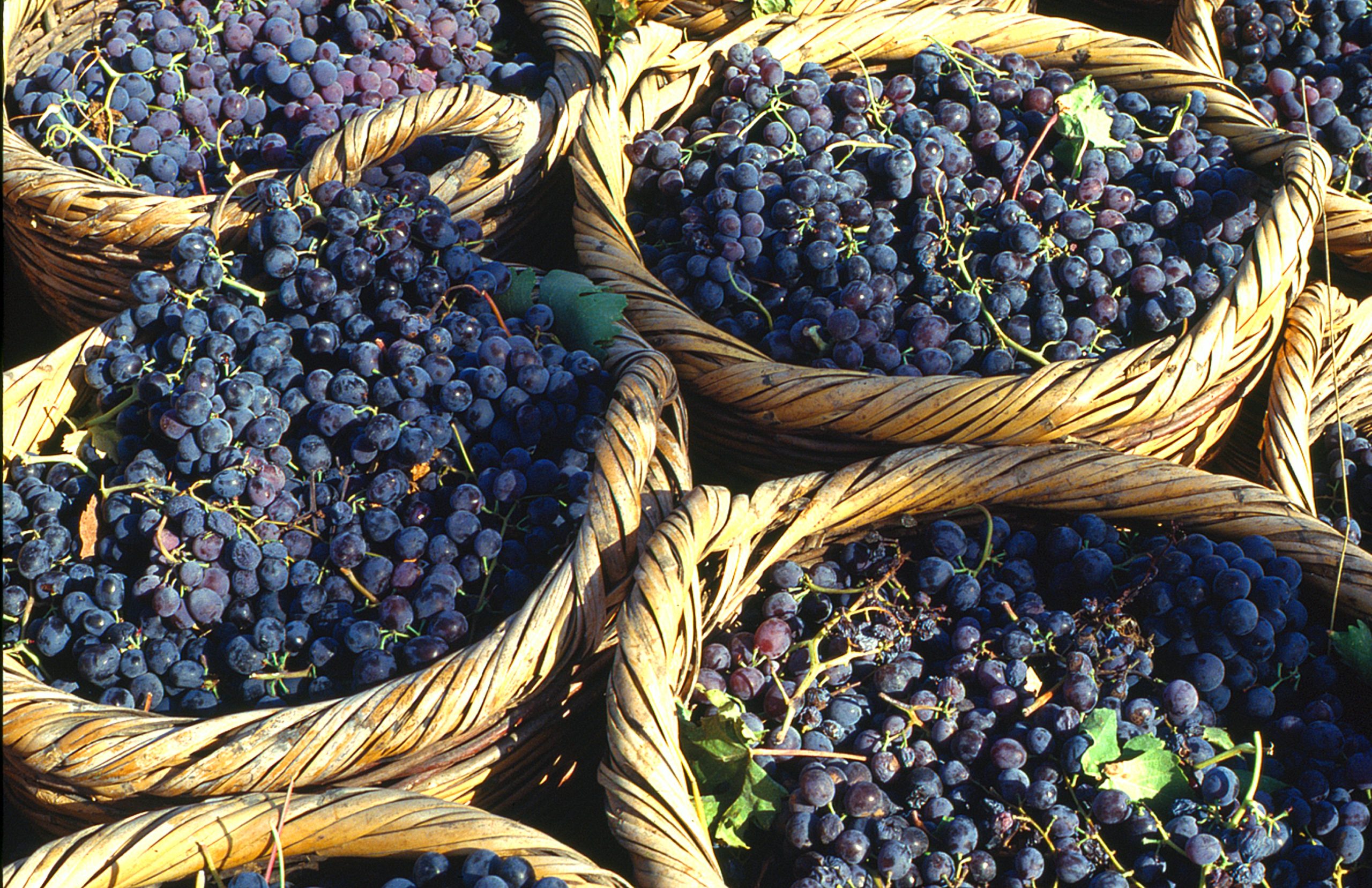
Xynisteri (white) and Mavro (red) grapes are harvested by hand in late summer, typically September, when fully ripe. The ratio of the two varieties varies by producer and tradition, but both must be grown within the fourteen designated Commandaria villages to qualify for the PDO.
02
Sun-Drying (Stifado)
The harvested grapes are laid out on reed mats, traditionally outdoors, now sometimes in ventilated drying rooms for ten to fifteen days. During this period, the grapes lose a significant proportion of their water content through evaporation, concentrating their sugars, flavours, and acids dramatically. This process is called stifado in Greek, and it is the step that most defines Commandaria’s character. Without it, you have a different wine entirely.
03
Pressing and Fermentation
The dried grapes are pressed, and fermentation begins. Because the sugar concentration is so high after drying, the yeast struggles to convert all of it to alcohol fermentation naturally arrests when the alcohol reaches a level at which yeast can no longer survive, typically around 15–16% ABV, while significant residual sugar remains. This is how Commandaria achieves its sweetness without fortification.
04
Ageing
Commandaria must be aged for a minimum of two years, of which at least one year must be in oak. Many producers age for considerably longer. The wine develops its amber colour through oxidative ageing in oak, gaining the dried fruit notes, the caramel, and the warm spice character that distinguish a mature Commandaria from a young one. Some examples are aged for a decade or more.
05
Blending (Optional)
Many commercial Commandaria producers blend across multiple vintages to achieve consistency. Some artisanal producers are now making vintage-dated single-village Commandaria, which shows considerably more variation from year to year but also considerably more character. Both approaches are legitimate; they simply produce different wines for different purposes.
What Does Commandaria Taste Like?
The honest answer is that it depends on who made it, how long it was aged, and what the harvest was like just as it does for any serious wine. But there are flavour characteristics that are reliably present across the range, and they are worth knowing before you taste.
The dominant impression is of sweetness but a sweetness that doesn’t feel heavy or cloying. The natural acidity of the Xynisteri grape, preserved through the drying process, provides a counterbalance that lifts the wine and keeps it from becoming syrupy. A good Commandaria should feel rich but not thick, sweet but not sugary. The finish should be long, warm, and gradually complex rather than immediately confected.
Young versus Aged Commandaria
The difference between a young, commercially produced Commandaria and a well-aged artisanal one is significant more so than in most wine categories. A young Commandaria is approachable and pleasant, with clean fruit flavours and reliable sweetness. An aged one, five, ten, fifteen years in oak is a fundamentally different experience: complex, layered, oxidative in the best sense, with a depth that rewards slow, attentive drinking.
If you are trying Commandaria for the first time, a commercial expression like KEO St John is a perfectly reasonable starting point. But if you want to understand what the wine is genuinely capable of, seek out a longer-aged expression from a boutique producer. The gap between the two is illuminating.
“
Visit CWFexpo at the CyWineFest
Taste Commandaria from multiple producers - side by side.
At CWFexpo, several Commandaria producers pour direct, giving you the opportunity to compare styles, ages, and expressions that are impossible to find anywhere else in the UK. The Decorium, London N22.
Get Tickets →What to Eat with Commandaria
Commandaria is more versatile with food than its reputation as a sweet dessert wine might suggest. The combination of high sweetness and high natural acidity means it can handle flavours that would overwhelm a lighter wine, and the combination of sweet and savoury is something Cypriot cuisine has understood for centuries.
The traditional Cypriot approach is to serve Commandaria at the end of a meal, with something sweet. That is still the most natural context. But there are other pairings worth knowing about — some of which work better than the conventional dessert-wine conventions would suggest.
Baklava
The classic Cypriot pairing. The wine’s acidity cuts through the honey and pastry; the spice notes in the wine echo the cinnamon and clove in the baklava. This is a pairing that evolved over centuries and shows it.
Loukoumades
Honey-fried dough fritters, served warm. The contrast between the crisp, hot pastry and the cool, rich wine is remarkable. Add a sprinkle of cinnamon and you have one of the most underrated pairings in Mediterranean food.
Aged Hard Cheese
Halloumi is too fresh and mild for Commandaria, but an aged kefalotyri or a sharp mature cheddar works exceptionally well. The saltiness of the cheese and the sweetness of the wine create a tension that makes both taste better than they would alone.
Dark Chocolate
70% cocoa or above. The bitterness of the chocolate and the sweetness of the wine are a natural counterpoint. This is one of the most reliable sweet wine pairings in any tradition, and Commandaria handles it particularly well.
Blue Cheese
Roquefort, Stilton, or a good Gorgonzola. The sweet-salty contrast works in the same way it does with Sauternes and foie gras, the richness of both elements amplifies the pleasure of each. A confident, unexpected pairing that rewards the brave.
Foie Gras or Duck Liver Pâté
The Sauternes pairing translated to Commandaria. Rich, fatty, savoury, the wine’s sweetness and acidity cut through perfectly. For a more accessible alternative, a good chicken liver pâté with brioche produces the same dynamic at a fraction of the price
How to Serve Commandaria
Serve Commandaria at 12–14°C slightly cooler than room temperature, but warmer than you would serve a dry white wine. Too cold and the aromas close down; too warm and the sweetness becomes oppressive. A brief spell in the fridge before serving is usually sufficient.
Use a small dessert wine glass rather than a standard white or red wine glass. The smaller bowl concentrates the aromas without overwhelming the senses with the alcohol. You don’t need a specialist glass — a port glass or a small tulip-shaped glass works well.
Commandaria does not need decanting. Pour and drink. The wine is already oxidatively developed through years of barrel ageing, and unlike a young tannic red, it gains nothing from additional air exposure before serving.
Where to Try and Buy Commandaria in the UK
Commandaria is the most widely distributed Cypriot wine in the UK, which means it is more findable than most, but still requires some effort relative to the ease of picking up a bottle of Bordeaux. Here is where to look.
Independent wine merchants with a Mediterranean focus are the most reliable first stop. Ask specifically for Commandaria by name. The KEO St John label is the most commonly stocked and provides a reliable introduction to the style. A good merchant may also be able to source less widely distributed examples on request.
Online, a search for “Commandaria wine UK” will surface the main specialist importers. As with any wine purchase online, read the product descriptions carefully importers who understand the wine will describe the producer, the ageing, and the tasting notes with specificity. Those who don’t will list it simply as “sweet red wine from Cyprus.” Buy from the former.
Cypriot community shops in London particularly in areas with a significant Cypriot diaspora such as parts of Haringey, Enfield, and South London often stock Commandaria, sometimes in labels not widely available elsewhere. These shops are worth knowing about regardless of what you’re looking for.
And then there is CWFexpo.
The annual Cypriot Wine Festival and Business Expo, held each June at The Decorium in North London, is by a significant margin the best single opportunity to taste and purchase Commandaria in the UK. Multiple producers pour direct, side by side, at producer prices. You taste before you buy. You ask questions of the people who made the wine. And you leave with bottles and with the kind of direct contact that allows you to continue ordering long after the festival ends.
The event takes place every year during the summer months at The Decorium, London N22. Tickets are available at cwfexpo.co.uk.
Frequently Asked Questions
Is Commandaria the same as Port?
No. Commandaria is a naturally sweet wine made from sun-dried grapes. Port is a fortified wine — its fermentation is deliberately stopped by the addition of grape spirit, which raises the alcohol and preserves residual sugar. Commandaria achieves its sweetness and its higher alcohol level entirely through the natural concentration of sugar in the dried grapes. Nothing is added. The result is a fundamentally different product, with a different flavour profile, a different texture, and a different production tradition that is several centuries older.
How sweet is Commandaria?
Commandaria ranges from medium-sweet to very sweet depending on the producer and the level of ageing. The residual sugar is high — typically 100–200 grams per litre in commercial examples — but the natural acidity of the Xynisteri grape prevents it from feeling cloying. A well-made Commandaria should feel rich and rounded rather than heavy or sickly. If it feels too sweet, try it with food — particularly something savoury or salty, which will bring the sweetness into balance.
How long does Commandaria last once opened?
Considerably longer than most wines. The high sugar content acts as a natural preservative, and Commandaria’s oxidative character means further exposure to air doesn’t damage it the way it would a delicate white or an aged red. A well-stoppered bottle stored in the fridge will keep for three to four weeks after opening. Some producers suggest that Commandaria actually improves over the first few days after opening as the wine adjusts to air contact — which is the opposite of what most wine drinkers are told to expect.
Can I cook with Commandaria?
Yes, and it is excellent for it. Commandaria makes a superb reduction sauce for duck, pork, or lamb, its sweetness caramelises beautifully and its complexity adds depth that a generic sweet wine cannot match. It also works well in marinades for game, in sweet-savoury glazes, and in the Cypriot spiced sausage loukaniko, where it is sometimes used as a curing ingredient. If you are cooking with it, use a commercial expression rather than an aged artisanal bottle, the flavour difference will not justify the price difference once the wine hits heat.
Is Commandaria vegan?
It depends on the producer. Some Commandaria producers use animal-derived fining agents such as egg white or isinglass, which would make the wine non-vegan. Others use vegan-friendly alternatives or do not fine at all. The most reliable approach is to ask the producer directly. At CWFexpo, you have the opportunity to have this conversation face-to-face with the winemakers themselves, which is the most direct answer available in the UK.
Continue reading - Cypriot Wine Series